

What Makes a Better Hybrid-Meeting Setup? Start With Voice, Video and Simplicity
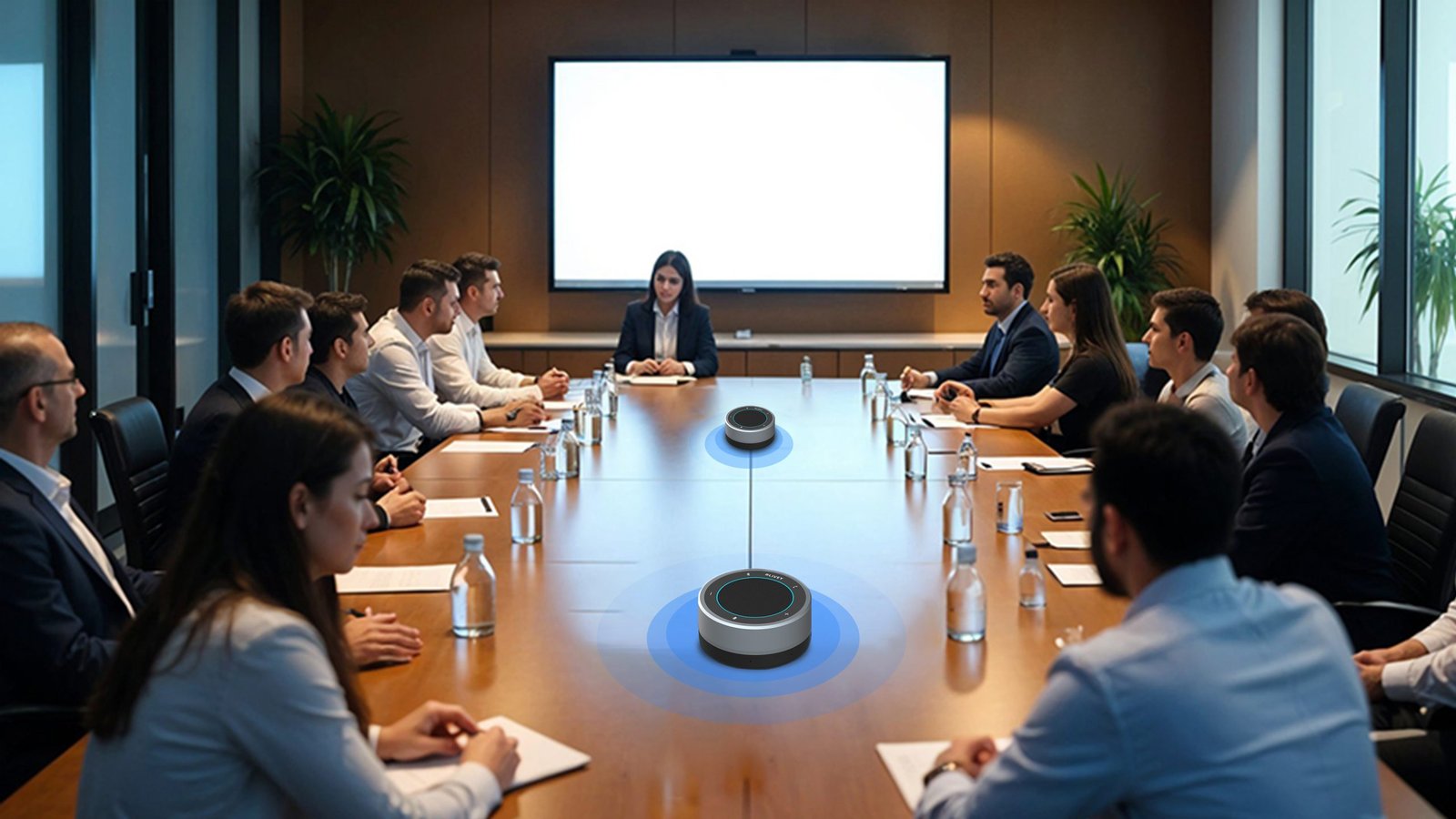
A hybrid meeting succeeds when technology disappears into the background. People should be able to join quickly, hear every contribution and follow the discussion without repeatedly adjusting devices or asking others to repeat themselves.
That outcome depends less on adding more equipment and more on choosing the right combination of voice capture, room audio, video and connectivity for the space.
Begin with the room, not the specification sheet
A small focus room and a large conference space create very different communication demands. Before choosing hardware, consider how many people normally join, where they sit, how much ambient noise is present and whether meetings are mostly conversational or presentation-led.
For larger rooms, microphone coverage and echo control become central. The Audixa CS300, for example, combines an eight-microphone array with AI-supported noise and echo cancellation to make voices easier to follow across a shared space. The goal is not simply louder sound; it is clearer participation.
Give remote participants a complete view
Video should support the conversation rather than create another point of friction. Resolution matters, but so do framing, autofocus, low-light handling and privacy. A camera such as the RealSight HelloSync WCH100 adds secure Windows Hello access alongside clear professional video, making it useful beyond the meeting itself.
In practice, a dependable camera should maintain a natural image as lighting changes, keep the subject sharp and connect without a complicated deployment process.
Reduce setup friction
Teams lose time when room equipment requires specialist knowledge. Plug-and-play connectivity, familiar controls and consistent device behaviour help meetings begin on time. For IT teams, straightforward deployment also reduces support overhead across multiple rooms and locations.
Where possible, standardise a small number of configurations for common room types. A repeatable setup makes training easier and creates a more predictable experience for employees and guests.
Design for equal participation
The most useful measure of meeting technology is whether it helps remote and in-room participants contribute on equal terms. Clear pickup reduces interruptions. Balanced room audio prevents one side of the conversation from dominating. Reliable video adds context that voice alone cannot provide.
A strong hybrid setup therefore works as a system: voice, video and connectivity selected around the room and the people using it.
Explore the Audixa CS300 conference speakerphone and RealSight HelloSync WCH100 webcam.